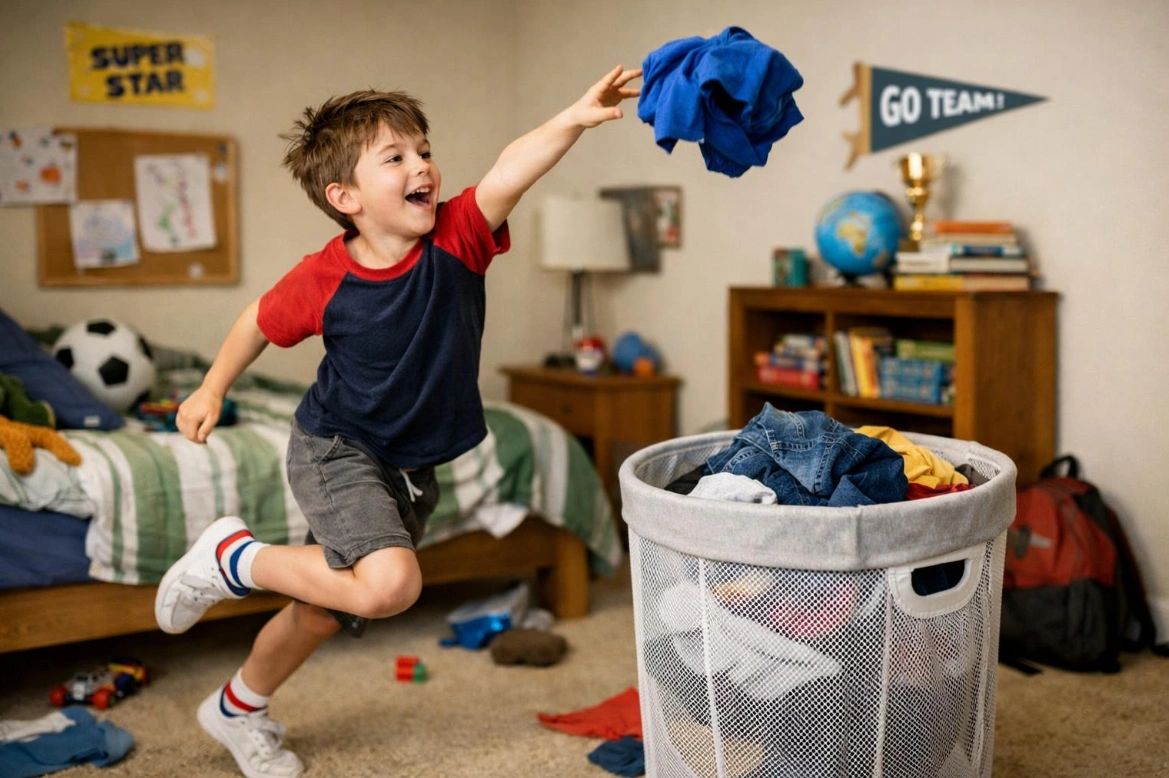
How to transform daily tasks into confidence‑boosting wins
Chores don’t have to be a battle. In fact, with the right approach, they can become tiny missions that build independence, teamwork, and a sense of achievement. When families gamify everyday tasks, children stop seeing chores as “jobs” and start seeing them as challenges they can conquer.
This week on SwotSavvy, we’re exploring how to turn your home into a playful, motivating environment — without adding more work to your already full plate.
🧩 Why Gamification Works
Gamification taps into something children naturally love: progress, praise, and play.
When chores become challenges, children experience:
- A sense of ownership
- Clear goals and rewards
- Friendly competition (with themselves or siblings)
- A boost in confidence when they “level up”
It’s not bribery — it’s structure, motivation, and fun.
🏆 1. Create Mini Missions
Break chores into small, winnable tasks
Instead of “tidy your room,” try:
- Mission 1: Find and rescue all the socks
- Mission 2: Sort books into their “home zones”
- Mission 3: Defeat the laundry monster
Small tasks feel achievable and help children build momentum.
⏱️ 2. Beat the Clock
Timers turn chores into quick-fire challenges
- “Can you put all the toys away before the song ends?”
- “Let’s see if we can clean the table in 90 seconds.”
Short bursts reduce overwhelm and make chores feel like a game, not a punishment.
⭐ 3. Level Up with Points
A simple points system can transform motivation
- 5 points for making the bed
- 10 points for helping a sibling
- 20 points for completing a “boss level” task like folding laundry
Points can be traded for non-material rewards: choosing a film, picking dinner, extra story time, or a family walk route.
🤝 4. Team Challenges
Build connection, not competition
Try:
- “Family vs. Mess” — everyone tackles one room together
- “Tag Team Tidy” — each person completes one task then tags the next
- “Mystery Helper” — one person secretly helps others; everyone guesses who
These challenges strengthen teamwork and reduce the emotional load on parents.
🎨 5. Make It Visual
Children love seeing their progress
Use:
- Sticker charts
- Progress bars
- Colour-coded task wheels
- “Achievement badges” for new skills
Visuals help children understand effort, consistency, and responsibility.
🌱 What Children Learn (Without Realising)
Gamified chores quietly build:
- Independence
- Time management
- Problem-solving
- Resilience
- Pride in their environment
These are life skills that go far beyond tidying up.
💡 Final Thought
Gamifying your home isn’t about making everything perfect — it’s about making everyday life feel lighter, more connected, and more fun. If chores have become a source of stress or conflict, consider this your sign to try a new approach. A few playful tweaks can turn daily tasks into moments of confidence, teamwork, and joy.